
A mid-sized supply chain consulting firm had a strong reputation for helping manufacturers and logistics teams optimise operations. Their team was experienced, their outcomes were measurable, and their client roster included big names. Internally, they believed they were holding steady … even growing in some areas. But the new business pipeline had slowed to a trickle.
Despite outreach, conferences, and direct referrals, conversions were falling off. That’s when we looked closely at the company’s website—still unchanged from nearly a decade ago. Static pages. Long, jargon-filled paragraphs. No mobile responsiveness. No proof of recent wins. Prospective clients were clearly forming impressions online—and quietly walking away.
A complete buyer journey mapping revealed the pattern: even warm leads went cold after visiting the website. Sales teams were initiating solid conversations, but decision-makers were going online to “check credibility” and coming back unimpressed … or not at all.
In B2B sectors like supply chain, the website isn’t just a touchpoint … it’s a litmus test. When the digital face of a consulting brand doesn’t match its real-world competence, it casts doubt. The client’s real challenge wasn’t lead generation or conversion … it was the brand’s own digital self-undermining. They were credible in meetings … but invisible online.
I proposed a radical inversion: treat the website not as a pitch platform—but as a proof engine. Rather than trying to explain what they offered, the new site would simulate the results their best clients now experienced after working with them. Every page would act like a “preview of success”: showing optimised workflows, smoother decision dashboards, and visible ROI, all tailored to supply chain roles like COOs, procurement heads, and logistics managers.
This changed the voice from selling a service to projecting a future. The site let visitors see who they could become … not just what they could buy. It created instant emotional alignment with high-stakes stakeholders who didn’t just want a vendor … they wanted confidence.
I scrapped the traditional navigation and built journeys around problem–resolution–result flows. The homepage led with a single bold sentence: “We help manufacturers cut operational inefficiencies by up to 30% in 90 days” … backed by animated metrics, client videos, and visualised proof.
Every page was built to serve trust. We introduced an interactive Results Hub, video explainers of past projects, and role-based content. A floating trust panel offered persistent access to credentials, awards, and partner logos. And the entire mobile experience was rebuilt from zero … prioritising speed, clarity, and interaction over legacy layouts.
Here are 10 strategic ideas developed (and several executed) to support the new brand direction:
Results Hub Navigator: A page where users filter by challenge (e.g. delays, excess stock) and see case stories with ROI outcomes.
Mini-Dashboard Demos: Embedded video snippets showing simulated KPI improvements in procurement, warehouse, and logistics settings.
“Life After Us” Page: A bold page showing the transformed daily life of typical client roles after engagement with the brand.
Animated Timeline Explainers: Showing the before–during–after journey of typical projects in 60 seconds.
Founder’s Field Notes: A micro-blog from the founder decoding market trends and tactical shifts in real-time.
Proposal Preview Tool: A lead magnet that let users assemble a rough scope to understand timelines and estimated returns.
Voice-of-the-Client Clips: Video scrolls featuring 15–30 second praise clips recorded directly by client teams.
“Not a Fit If…” Page: Reversed the pitch by clearly stating who the brand didn’t serve—filtering noise and building edge.
Quick Insight Downloadables: 1-page sector-specific cheatsheets on metrics to watch and avoid in supply chains.
Live Trust Counter: Auto-updating number of active projects, client countries served, and delivery timelines met, embedded on every page.
Website bounce rate dropped from 74% to 28%, with average visit duration doubling.
Inbound leads rose 46%, with three major clients citing the new site as a key credibility factor.
Closed two multi-year retainers within 90 days of site relaunch.
Reached Page 1 ranking for three niche B2B keywords tied to supply chain diagnostics.
CONFIDENTIALITY CAVEAT: This case study represents a confidential engagement. For privacy, specific brand identifiers, campaign names, and project phases have been withheld. It has been shared with permission while preserving client discretion.

“Brand momentum rarely returns through optimisation or activity. It returns through a breakthrough idea that recentres the brand and restores forward movement.”
Shobha Ponnappa
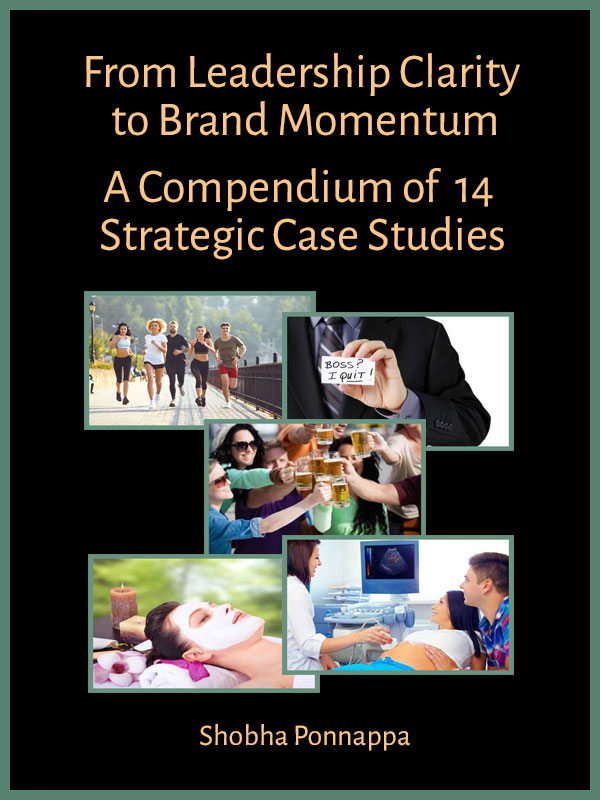
Download the 14-case collection and receive weekly insights on leadership articulation and brand momentum.
Get my free Case Studies Compendium. Leadership clarity sharpened, strategy articulated, and brands set back into motion.
You’ll also get my fortnightly Brand Reframe newsletter. with smart insights, distilled thinking, and focused ideas to help your brand.
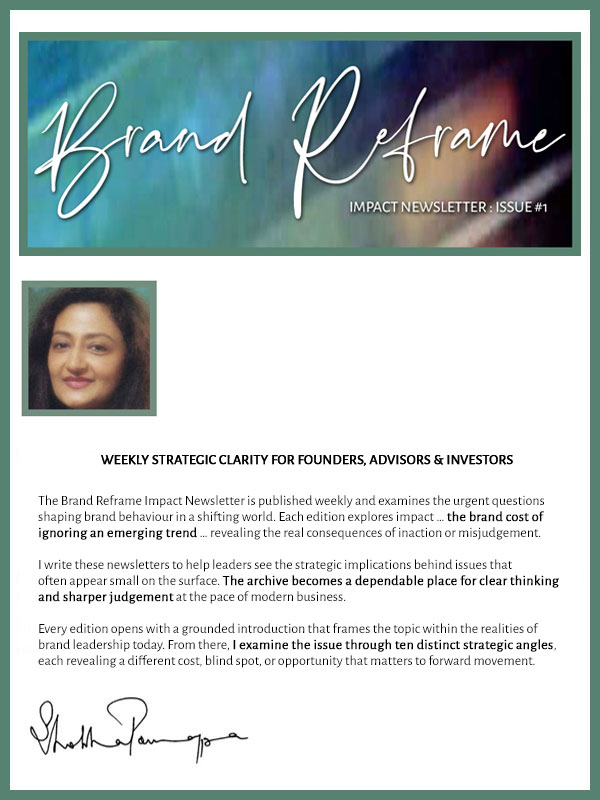
Just fill in the form to join. Be part of our circle thriving on brand clarity, good judgement, and several game-changing tips.