Why Does Complexity Keep Growing?
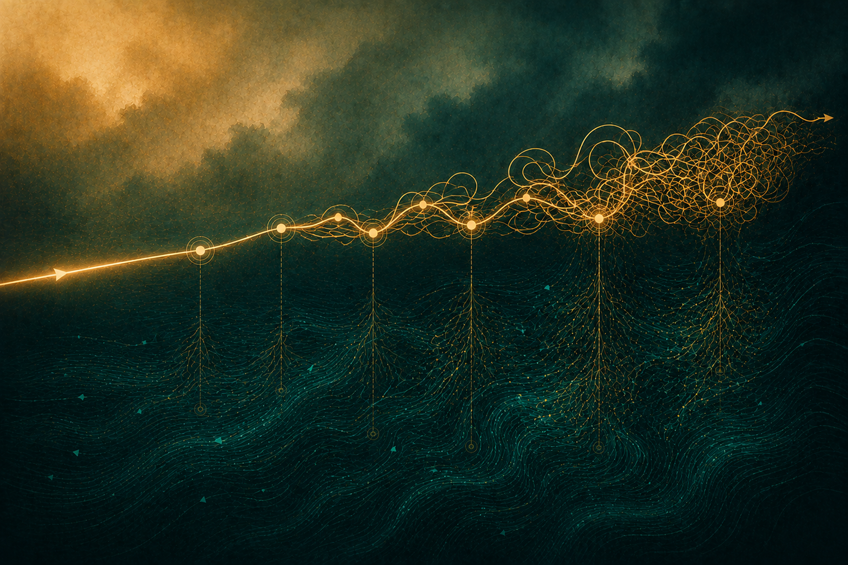
“We have fewer people than we had five years ago, but somehow there are more processes, more approvals and more things that need to be checked.” The COO pauses, looking around the table. “Every time we simplify something, another layer seems to appear somewhere else.” Nobody can identify the moment when the organisation became this complicated. The organisation has accumulated complexity without ever deciding to become complex.
The CFO looks through a stack of reports. “What troubles me is that none of these things looks unreasonable on its own.” She names a control introduced after a mistake, a meeting created after a missed handover and a report added when someone needed greater visibility. “We keep adding things for good reasons, yet the whole system keeps getting harder to navigate.” Complexity often enters an organisation disguised as a reasonable response to a previous problem.
Every Layer Has A History
Organisations rarely become complicated through one grand decision. Complexity grows through small acts of protection, correction and accommodation, each responding to something that once appeared important. A new approval prevents one kind of error, a new metric clarifies one uncertainty and a new process compensates for one weakness. What looks like unnecessary complexity today may be the accumulated memory of yesterday’s problems.
The difficulty is that yesterday’s solution seldom announces when its usefulness has ended. The original circumstances disappear, but the process remains embedded in routines, expectations and systems. New employees inherit the structure without inheriting the history that created it, so its existence begins to feel inevitable. Complexity becomes invisible when the reasons for creating it are forgotten.
The Organisation Remembers What Leaders Forget
Every addition leaves something behind. A control creates another decision point, a meeting creates another dependency and a reporting requirement creates another interpretation of what matters. Over time, these remnants begin interacting with one another in ways that nobody originally intended. The organisation’s complexity is created not only by what is added, but by what those additions begin to connect.
This is why simplification programmes so often disappoint. Removing one process may simply expose another dependency that had been hidden beneath it, because the organisation has adapted around the accumulated structure. What appears to be bureaucracy may therefore be the visible expression of many invisible accommodations. Complexity persists because organisations adapt to their own accumulated adaptations.
Complexity Is Often A Failure Of Coherence
At some point, the issue is no longer the number of processes. It is the absence of a shared logic connecting them. Different parts of the organisation begin protecting different risks, serving different interpretations of priority and responding to different definitions of what must not go wrong. Complexity accelerates when the organisation loses a coherent basis for deciding what deserves to exist.
This creates a peculiar organisational experience. Everyone can explain why their particular requirement matters, yet nobody can explain why the whole system requires all of them together. The organisation therefore becomes increasingly sophisticated at accommodating exceptions without reconsidering the assumptions that produced them. An organisation can become highly capable at managing complexity while becoming less capable of questioning it.
The Invisible Cost Of Accumulation
Perhaps the deeper question is not why organisations keep adding processes, controls and structures. It is why they rarely revisit the invisible logic that makes those additions feel necessary. Once the organisation has adapted around its accumulated complexity, removing one element can feel more dangerous than preserving ten others. The hardest complexity to remove is the complexity the organisation has learned to depend upon.
This changes how organisational complexity can be seen. It is not simply a measure of bureaucracy, hierarchy or process, but a record of how an organisation has responded to uncertainty over time. Read that way, complexity becomes evidence of the organisation’s past judgements, unresolved assumptions and adaptations. What looks like organisational complexity on the surface may be the history of organisational judgement preserved underneath it.